
Trade-In With Negative Equity in Berkeley, MO
How Berkeley, MO dealers calculate negative equity on a trade, how Missouri sales tax treats the allowance, and what to check before you sign.
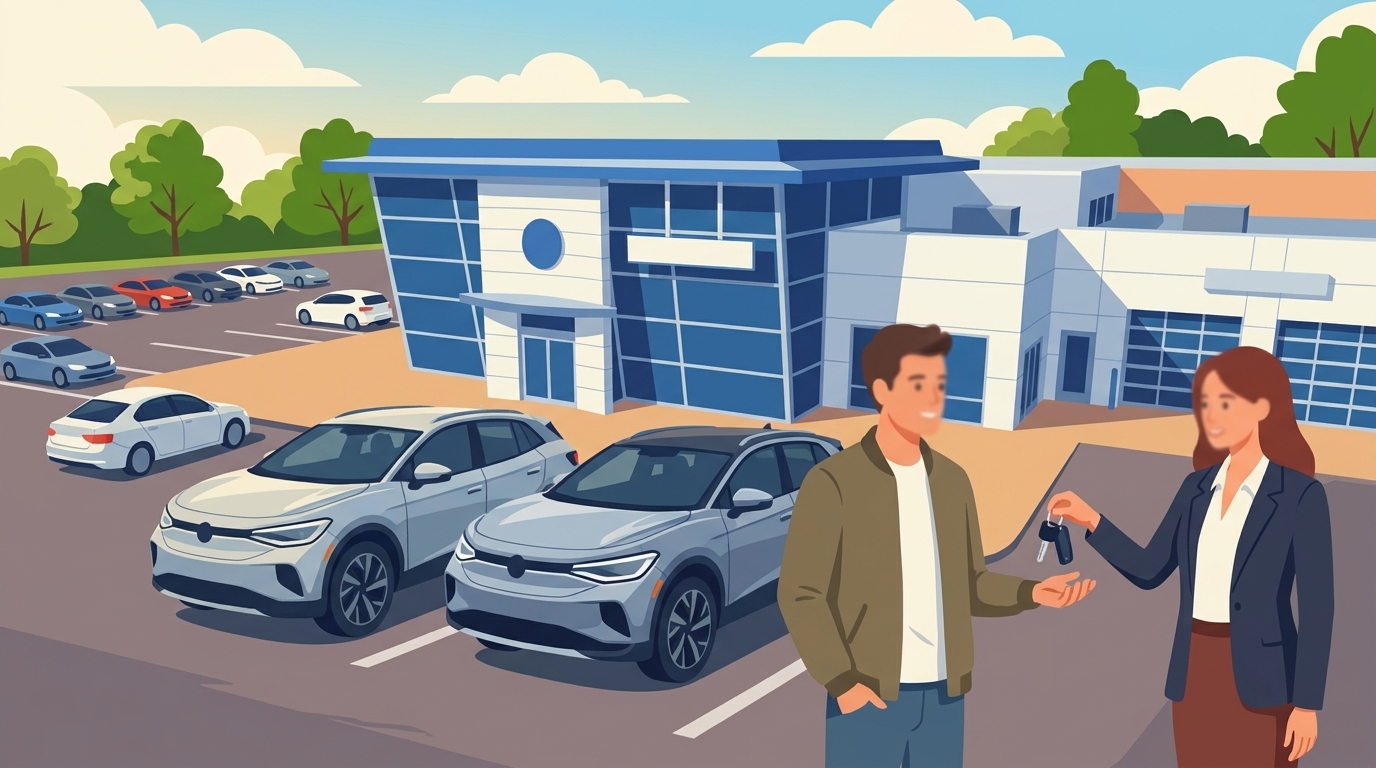
If you owe more on your current car than it's worth in Berkeley, MO, a dealer can still take it in trade — they'll apply your negotiated trade allowance to your loan payoff, and the shortfall (your negative equity) either gets paid in cash at signing or rolled into the financing on your next vehicle. Under Missouri law (RSMo § 144.025.1), sales tax is calculated on the new vehicle's price minus the actual trade allowance, not the payoff, so negative equity does not shrink your tax bill.
That single sentence is where most Berkeley-area trade-in confusion starts and ends. The rest of this guide takes you under the hood of the math, the paperwork, and the local rules so you know exactly what's happening on your buyer's order before you sign it.
What does negative equity actually mean on a trade-in?
Negative equity is the gap between what you still owe your lender and what a dealer is willing to pay for your car. If your payoff is $22,000 and the dealer offers you a $17,000 trade allowance, you have $5,000 in negative equity. That $5,000 doesn't disappear when the dealer takes the keys — it either comes out of your pocket at signing or gets added to the loan on your next vehicle, increasing the amount financed.
How do Berkeley, MO dealers calculate your payoff and trade value?
Dealers calculate two numbers independently: the lien payoff (a 10-day good-through figure they request directly from your lender) and the trade allowance (what they'll credit you toward the new car). The payoff is fixed by your lender; the allowance is negotiable and driven by auction data, local demand, mileage, condition, and reconditioning cost. The difference between them is your equity position — positive or negative.
The payoff quote
Your payoff includes remaining principal plus per-diem interest through the quote's expiration date. If the deal takes two weeks to close, interest accrues, and the final check the dealer sends your lender may be slightly higher than the initial quote. Reputable stores like Bommarito Volkswagen of Hazelwood pull an updated payoff before cutting the check to avoid a shortfall that lands back on you.
The trade allowance
The allowance is what the dealer will actually book your car for on the deal. It's not the same as retail value, KBB "trade-in" range, or an online instant-offer number — those are estimates. The written allowance on your buyer's order is the only figure that matters, both for your equity math and for Missouri sales tax.
How does Missouri's trade-in tax credit work when you have negative equity?
Missouri sales or use tax is computed on the purchase price minus the actual, documented trade-in allowance under RSMo § 144.025.1 — nothing more. If your trade allowance is $17,000, you get a $17,000 reduction in the taxable base, even if your payoff is $22,000. The extra $5,000 in negative equity is not a trade allowance and does not further reduce tax. A bill of sale or other record documenting the allowance is required for the credit to apply.
One useful wrinkle for motor-vehicle buyers: a documented manufacturer or seller rebate also reduces the taxable purchase price under the same statute. And if the trade allowance plus rebate exceeds the new vehicle's price, no sales or use tax is owed on that purchase. (The statute excludes transactions governed by subsections 4 and 5 of § 144.025 from this general rule — verify current wording with the Missouri Revisor of Statutes at revisor.mo.gov before relying on this summary for a specific deal.)
What are your options for covering the negative equity?
You have three practical paths in Berkeley, MO: pay the difference in cash at signing, roll the negative equity into the loan on your next vehicle, or wait until you have positive equity before trading. Each has real cost implications, and the right answer depends on your rate, term, and how upside-down you are.
| Option | How it works | Best when |
|---|---|---|
| Pay the gap in cash | You write a check for the shortfall at signing; new loan starts at the new vehicle's price | You have savings and want to avoid financing a balance on a car you no longer own |
| Roll it into the new loan | The negative-equity amount is added to the amount financed on the new vehicle | You need the new vehicle now and can absorb a higher loan balance and payment |
| Wait it out | Keep the current car, pay down principal, and revisit when the loan-to-value flips | You're deeply upside-down and the current car is still reliable |
| Sell privately, then buy | A private-party sale often nets more than trade allowance; you close the loan yourself | You have time, patience, and a clean title process — but you lose the Missouri tax credit |
That last row is where the Missouri tax rule bites hardest. A private sale might net you $1,500 more than the dealer's allowance, but you also forfeit the sales-tax reduction on the next purchase. On a $30,000 vehicle in the St. Louis County tax environment that Berkeley sits inside, the trade credit is usually worth more than the private-sale premium. Run both numbers before you decide.
How can you maximize your trade allowance in the North County market?
The trade allowance is the one variable you can move. Bring service records, a clean interior, all keys and manuals, and — if you're near a lease-return or manufacturer buyback window — time your visit before mileage bands or seasonal demand shifts. In North County, SUVs and trucks tend to hold demand year-round, while convertibles and sporty coupes soften ahead of winter.
Get more than one written appraisal. Trade numbers vary between stores because reconditioning costs, current inventory needs, and auction access differ. A dealer that already has six of your model in stock will book yours lower than a dealer that's short on that segment. Bommarito Volkswagen of Hazelwood, at 400 Brookes Dr just off Lindbergh in Hazelwood, sits in a cluster of Boulevard-area dealerships that makes cross-shopping straightforward on a single afternoon.
What should your buyer's order show?
Your buyer's order should list the trade allowance as its own line, the lien payoff as a separate line, and the negative-equity amount transparently — not buried in a "cash difference" figure. Sales tax should be computed on the new vehicle's price minus the trade allowance (and any documented rebate), consistent with RSMo § 144.025.1. If any of those numbers look bundled or unclear, ask for a re-print before signing.
This is the fee-transparency test buyers should apply everywhere. Dealerships that itemize cleanly — trade, payoff, tax base, doc fee, title and registration — are the ones that hold up on audit and on customer trust. Bommarito Volkswagen of Hazelwood has earned 4.8 stars across 5,017 Google reviews as of August 2026, with buyers repeatedly citing straightforward paperwork and no-pressure sales.
Frequently asked questions
Can I trade in a car in Berkeley, MO if I still owe money on it?
Yes. Dealers routinely trade in financed vehicles. They request a 10-day payoff from your lender, pay off the loan directly, and apply your negotiated trade allowance to your next purchase. If your payoff exceeds the allowance, the difference is negative equity that you either pay in cash or finance into the new loan.
Does Missouri give me a sales tax break on my trade-in?
Yes. Under RSMo § 144.025.1, Missouri sales or use tax is calculated on the purchase price minus the documented trade-in allowance, provided a bill of sale or other record shows the allowance. Documented manufacturer or seller rebates on motor vehicles also reduce the taxable base. If allowance plus rebate exceeds the new vehicle's price, no sales tax is owed on the purchase.
Does negative equity increase my Missouri trade-in tax credit?
No. The Missouri trade-in reduction is limited to the actual, agreed-upon trade allowance documented on the bill of sale. A lien payoff that exceeds the trade allowance — the negative-equity portion — does not add to the tax credit. Only the negotiated allowance counts toward reducing your taxable purchase price.
Is it better to roll negative equity into the new loan or pay it in cash?
Paying in cash keeps your new loan balance tied to the actual vehicle value, which protects you from starting the next loan upside-down. Rolling it in preserves cash but increases the amount financed, the monthly payment, and the risk of carrying negative equity into a future trade. If you can cover the gap without draining reserves, cash is usually the cleaner move.
Will a private sale get me more than a Berkeley, MO dealer trade?
Often yes on the sale price, but not always on the net outcome. A private sale forfeits the Missouri sales-tax reduction on your next purchase, which can be worth more than the private-sale premium depending on the new vehicle's price and local tax rate. Run both scenarios end-to-end before deciding.
What paperwork should I bring to trade in a financed car?
Bring your driver's license, current registration, all keys and remotes, owner's manual, your lender's name and account number, and a recent payoff quote if you have one. Service records help support your trade value. If the title is held by the lender, the dealer coordinates the title transfer directly with them once the payoff clears.
Where this leaves Berkeley, MO buyers
Trading in a car with negative equity in Berkeley, MO is a math problem, not a mystery. Get the payoff in writing, get more than one trade appraisal in writing, confirm the sales tax on your buyer's order is computed against the allowance (not the payoff), and decide honestly whether you can cover the gap in cash or need to finance it. Readers in Berkeley, MO who want the numbers walked through in person can reach Bommarito Volkswagen of Hazelwood at 400 Brookes Dr, Hazelwood, MO 63042, by phone at (314) 731-7777, or at https://www.bommaritovwhazelwood.com/ to get an appraisal and a clean, itemized quote.