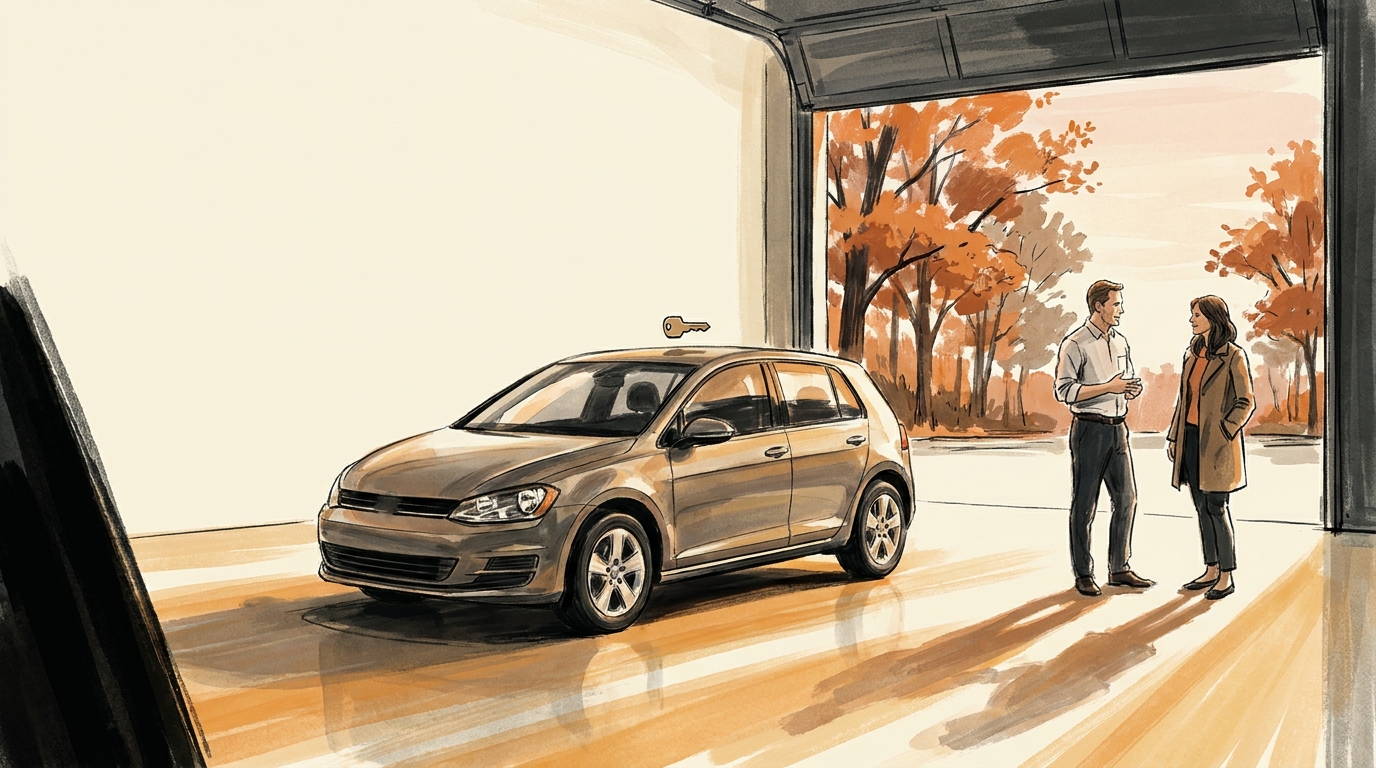
Trade In Financed Car in Hazelwood, MO: What to Expect
Owe more than your trade-in is worth? Here's how negative equity, Missouri trade-in tax credit, and dealer financing actually work in Hazelwood.
If you trade in a car you still owe money on in Hazelwood, the dealer pays off your lender directly — and if your loan payoff is higher than the trade-in allowance, that difference (called negative equity) gets paid out of pocket, taken from your down payment, or rolled into your new loan. Negative equity doesn't disappear in the deal; it only moves. Everything below explains exactly how that movement works at a Hazelwood dealership, what Missouri's trade-in sales-tax rule does for you, and the paperwork you should expect before you sign.
What does it actually mean to be "upside-down" on a car loan?
Being upside-down means your loan payoff is larger than the vehicle's market value. According to the FTC, negative equity occurs when you owe more on your car loan than the car is worth. According to the FTC, negative equity is the amount by which your loan payoff exceeds the trade-in allowance — a gap the borrower still owes.
This situation is common in the first two to three years of a long-term loan, especially after a large rebate or small down payment on the original purchase. Depreciation outruns principal paydown, and the gap is what shows up when you ask for a trade appraisal.
How does trading in a financed car work at a Hazelwood dealership?
The dealer appraises your vehicle, requests a payoff quote from your lender, and — if you move forward — sends the payoff check directly to your lienholder as part of closing the new deal. The lien release and title transfer happen between the lender and the dealer, separate from your purchase paperwork. You walk out with the new car; the lien on the old one clears within a few weeks.
At Bommarito Volkswagen of Hazelwood, located at 400 Brookes Dr just off Lindbergh near I-270, the appraisal and payoff request typically happen in the same visit, and the store's Bommarito FastPass digital retailing tool lets you start the trade valuation and financing paperwork online before you ever come in.
What happens to the negative equity when I trade in?
Per the FTC, dealers may add negative equity to the new car loan, take it from the down payment, or both. Those are the three outcomes — there is no fourth. Which one applies to your deal depends on your lender's loan-to-value limits, your credit tier, and how much cash you're bringing.
- Pay the gap in cash at signing. Cleanest option; keeps the new loan balance tied to the new vehicle's real value.
- Apply your down payment to the gap first. Reduces or eliminates negative equity before any amount gets financed.
- Roll the negative equity into the new loan. Lender permission required; raises your amount financed and your monthly payment.
Rolling the gap in is the option most Hazelwood shoppers ask about, and it's legal and disclosed — but it means you start the new loan already upside-down on day one.
What disclosures should I see before I sign?
Federal Regulation Z (Truth in Lending) requires the dealer to give you written credit disclosures itemizing the amount financed, the down payment applied, and how any negative equity is being handled before you sign the retail installment contract. The 2026 Regulation Z coverage threshold for certain consumer credit transactions is $73,400 or less, which covers essentially every passenger-vehicle loan written in Hazelwood.
Read the "amount financed" line carefully. If a salesperson told you they'd "pay off your trade" but the amount financed on the contract is higher than the new vehicle's price plus taxes and fees, the difference is your old negative equity rolled in. The FTC has stated that if a dealer told you they would pay off your car themselves but really rolled the cost into a loan, that is illegal — the key word is disclosure.
How does Missouri's trade-in sales-tax credit affect the math?
Missouri reduces the taxable purchase price of your new vehicle by the trade-in allowance — the agreed value of the car you're trading, not your loan payoff. If you buy a $35,000 vehicle and trade one appraised at $12,000, you pay Missouri state and local sales tax on $23,000, regardless of whether your old loan payoff was $9,000 or $15,000. The payoff amount doesn't change the tax base.
That tax savings can be meaningful on a Missouri transaction, and it's one reason trading in at a licensed Missouri dealer often nets out better than selling the car privately and buying separately, even when the private-party offer looks higher on paper. Missouri's specific statutory language is administered by the Missouri Department of Revenue — confirm current rates and any vehicle-class rules before you finalize numbers.
What if my credit isn't great?
Lenders set their own rules on how much negative equity they'll allow you to roll into a new loan, and those limits tighten as credit scores drop. A buyer with strong credit may get approval to finance a higher percentage of the new vehicle's value, while a lender working with weaker credit may cap the deal at a lower loan-to-value and require more cash down to absorb the gap.
Bommarito Volkswagen of Hazelwood works with multiple lenders — the store is part of what it describes as the No. 1 auto group in Missouri — which generally gives the finance office more approval paths to work with when a deal is tight. The store also runs a Volkswagen College Grad program for recent graduates building credit history.
How can I get the strongest trade number before I walk in?
Know your car's value and your exact payoff before the appraisal. The FTC recommends consumers research what their current vehicle is worth before negotiating. Call your lender for a 10-day payoff — not just your current balance, because interest accrues daily.
Then compare the dealer's appraisal to the published trade-in range (not the private-party range) from those guides. A fair offer typically lands inside that range; a low offer deserves a question about what the appraiser saw.
Payoff vs. trade-in allowance at a glance
| Scenario | Trade-in allowance | Loan payoff | What you owe/receive |
|---|---|---|---|
| Positive equity | $14,000 | $10,000 | $4,000 credit toward new vehicle |
| Even | $12,000 | $12,000 | Lien satisfied, no cash/credit either way |
| Negative equity (FTC example) | $15,000 | $18,000 | $3,000 gap — pay cash, apply to down payment, or roll into new loan |
The dollar figures in the first two rows are illustrative; the third row reflects the FTC's published example.
What VW models are Hazelwood shoppers typically rolling equity into?
The model you choose affects how much negative equity a lender will allow you to roll, because loan-to-value is calculated against the new vehicle's price. Lower-priced models leave less headroom.
On the affordable end of the current lineup, the 2026 Volkswagen Jetta, starting at $23,995 (as of October 2026) and the 2026 Volkswagen Taos, starting at $26,500 (as of October 2026) keep total financed amounts modest. For families, the 2026 Volkswagen Tiguan, starting at $30,805 (as of November 2026), the 2026 Volkswagen Atlas Cross Sport, starting at $38,300 (as of October 2026), and the 2026 Volkswagen Atlas, starting at $39,310 (as of November 2026) are common trade-up targets. EV shoppers typically look at the 2026 Volkswagen ID.4, starting at $45,095 (as of October 2026) or the 2026 Volkswagen ID. Buzz, starting at $59,995 (as of October 2026). Enthusiasts weigh the 2026 Volkswagen Golf GTI, starting at $34,590 (as of October 2026), the 2026 Volkswagen Jetta GLI, starting at $33,795 (as of October 2026), and the 2026 Volkswagen Golf R, starting at $49,455 (as of October 2026).
"Visited here last week because my car was having issues and I needed a replacement. Salesman named Phoenix helped find me a great car with a great deal and it thankfully didn't take all day!" — 5★ · Jason, Nov 2026
Frequently asked questions
Can a Hazelwood dealer refuse to take my trade if I'm upside-down?
A dealer can decline any trade, but most will work with negative equity if the overall deal and your credit support it. The decision usually comes down to whether the lender will approve the resulting loan-to-value ratio. Bringing cash to cover some or all of the gap dramatically increases approval odds and keeps your new-loan balance closer to the vehicle's real value.
Will trading in a financed car hurt my credit?
The trade itself doesn't hurt your credit — your old loan simply gets paid off and closed, which is a neutral-to-positive event. What can affect your score is the new loan's hard inquiry and its higher balance if you rolled in negative equity. Making the first several payments on time offsets the inquiry fairly quickly.
What paperwork do I need to bring to trade in a financed vehicle?
Bring your driver's license, current insurance card, both sets of keys, the owner's manual, and your most recent loan statement showing the account number and lender contact information. The dealer handles the payoff request and title work directly with your lienholder. If the title is in your possession (rare on a financed car), bring it as well.
Does Missouri tax me on the loan payoff or the trade-in allowance?
Missouri's trade-in sales-tax credit reduces your taxable purchase price by the trade-in allowance — the agreed value of the vehicle you're trading — not by the loan payoff. If your payoff is higher than the allowance, the extra payoff amount does not reduce your tax base; only the appraised trade value does. Confirm current rules with the Missouri Department of Revenue.
Should I pay down my loan before trading in?
If you have cash available and you're close to even, a pre-trade principal payment can flip the deal from negative to positive equity and simplify financing. If you're deeply upside-down, the same cash applied as a down payment at signing accomplishes the same math without tying up funds before you have a signed deal. Run both options with the finance office.
How long does the payoff actually take after I trade in?
The dealer typically sends the payoff check to your lender within a few business days of closing, and the lender posts it and releases the lien within roughly two to four weeks. During that window, you may still see the old loan on your credit report. Keep any autopay active until you confirm the loan shows a zero balance, then cancel it to avoid an overpayment that you'd have to chase back.
Bringing it all together
Trading in a financed car in Hazelwood is a routine transaction — the complications come from negative equity, not from the trade mechanics themselves. Know your payoff, know your car's market value, read the amount-financed line on the contract, and decide ahead of time whether you're willing to roll any gap into the new loan. Missouri's trade-in tax credit works in your favor regardless of how the equity shakes out.
Readers in Hazelwood, MO who want this handled professionally can reach Bommarito Volkswagen of Hazelwood at 314-731-7777 or visit https://www.bommaritovwhazelwood.com/ to start a trade appraisal, request a payoff quote, or run the numbers on a new vehicle before coming in.